Shadow AI's First SEC Casualty: A Technical Reconstruction of the Community Bank Data Leak

In May 2026, Community Bank, a regional bank operating across Pennsylvania, Ohio, and West Virginia, disclosed that customer names, Social Security numbers, and dates of birth had been exposed through an unauthorized AI application. The incident was deemed material within two days of discovery and resulted in what appears to be the first SEC Form 8-K cybersecurity disclosure directly linked to unauthorized AI usage.
The company disclosed that non-public customer information was processed through an unauthorized AI-based software application but did not identify the platform involved, the number of affected customers, or the workflow that led to the exposure. Based on the available information, customer data appears to have moved from controlled banking systems into an external AI environment operating outside the bank's approved technology stack.
Below is a technical reconstruction of the incident timeline, the likely data flow that enabled the exposure, and the unanswered questions that remain at the center of the investigation.

Reconstructing the Data Flow
According to CB Financial Services, the incident was identified on May 5, 2026, at Community Bank, its wholly owned banking subsidiary operating across Pennsylvania, Ohio, and West Virginia. The company disclosed that customer information had been exposed through the use of an unauthorized AI-based software application.
Although the company has not publicly disclosed the exact sequence of events, the available information allows for a reasonably constrained reconstruction of the likely workflow.
The exposed data points suggest that the source information originated from customer-facing banking systems rather than public records or marketing databases. Names, Social Security numbers, and dates of birth are typically stored within customer onboarding platforms, loan servicing systems, account management applications, or core banking environments.
The most probable scenario begins with an employee extracting customer records from an internal system for operational purposes. The employee would then submit those records to an external AI platform to assist with a task such as document generation, summarization, customer communication preparation, reporting, or administrative processing.
At that moment, the information crosses the bank's security boundary.
Unlike traditional banking applications that operate within controlled infrastructure, an unauthorized AI platform exists outside established governance controls. Once customer records are submitted, the organization typically loses visibility into how the data is stored, replicated, logged, retained, or processed. Depending on the platform architecture, submitted information may become accessible to additional processing services, provider-side logging systems, or model interaction records.
The filing does not indicate whether data was merely processed transiently or retained by the provider. It also does not disclose whether deletion requests were issued or whether the organization was able to verify complete removal of affected information.
These unanswered questions likely became central to the subsequent forensic investigation.
The Investigation
Immediately following discovery, Community Bank engaged external cybersecurity advisors to assist with incident response activities.
One of the more interesting aspects of the case is the apparent detection mechanism. Potential evidence sources would likely include web gateway logs, cloud access security broker telemetry, endpoint monitoring platforms, browser activity records, data loss prevention alerts, or internal audit findings. Any of these sources could provide visibility into customer information being transferred to an external AI service.
Investigators would have needed to answer several critical questions in a very short timeframe: which AI platform received the data, identify affected customer records, establish the duration of exposure, verify whether additional uploads occurred, and assess the provider's retention and processing practices.
The speed of the materiality determination suggests that investigators were able to quickly confirm both the sensitivity of the exposed information and the scale of the affected dataset.
Why the Incident Became Material
The materiality determination is perhaps the most significant aspect of the disclosure.
According to the filing, the incident did not disrupt banking operations, customer account access, payment processing systems, or core technology infrastructure. The company also stated that the event was not expected to have a material impact on its financial condition or operating results.
Despite the absence of operational disruption, the company determined the incident was material due to the volume and sensitive nature of the exposed information.
This distinction separates the case from many recent SEC cybersecurity disclosures. The incident was not driven by system compromise or business interruption. Instead, materiality appears to have been driven by the exposure of highly sensitive customer identifiers through an unauthorized processing environment.
The disclosed data elements, particularly Social Security numbers combined with names and dates of birth, represent a complete identity dataset capable of supporting fraud, identity theft, and account impersonation activities if improperly accessed.
The Remaining Unknowns
Several technical details remain undisclosed.
The company has not identified the AI platform involved, the number of affected customers, the employee population associated with the incident, the duration of the exposure, or whether the uploaded information was retained beyond the original processing session.
The filing also leaves unanswered whether the activity involved a single upload event or an established workflow that had been occurring for an extended period before discovery.
These details will likely determine the full scope of the incident as investigations continue.
The Shadow AI Architecture Problem
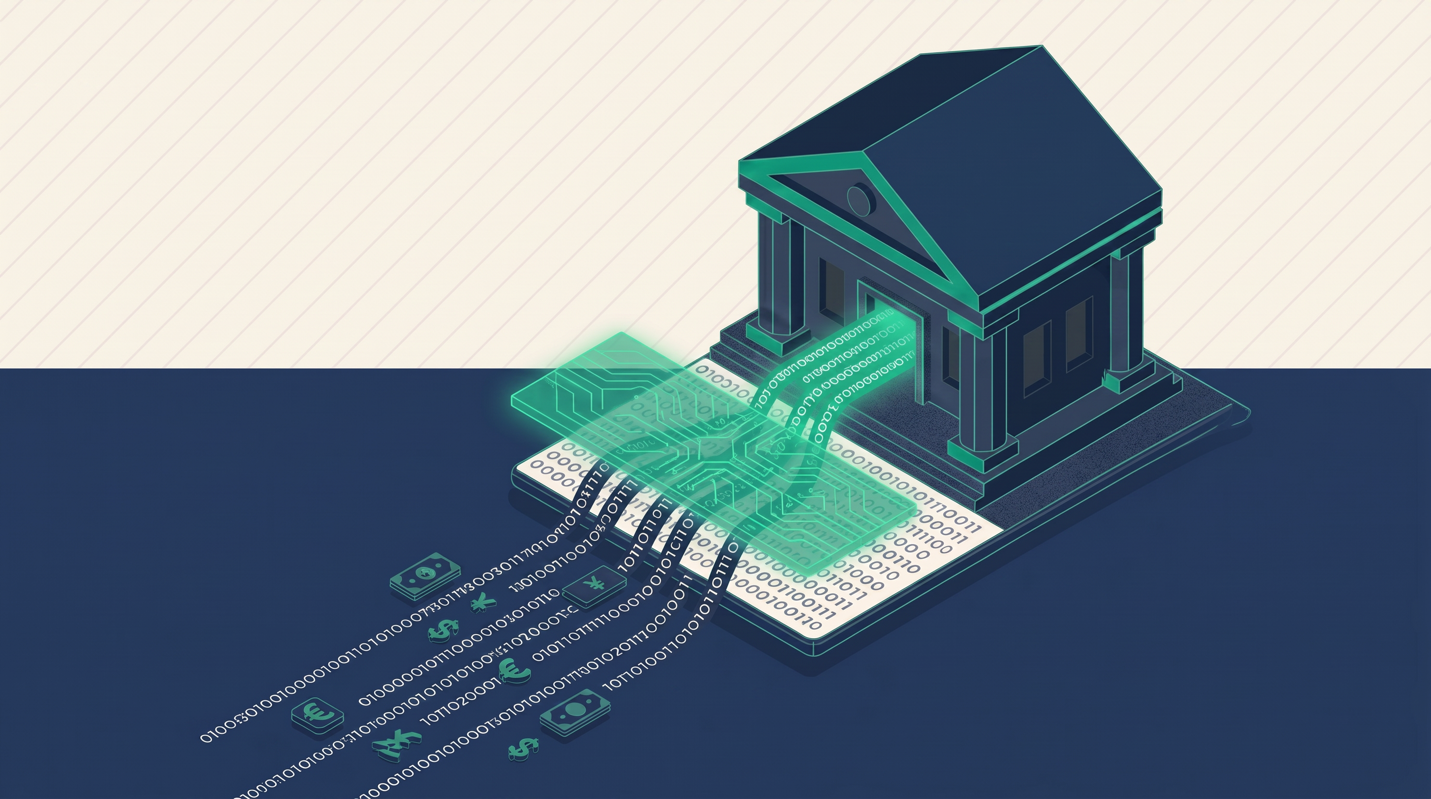
One of the most significant technical aspects of the incident is that the exposure appears to have occurred without any compromise of Community Bank's internal infrastructure. The customer information moved from a regulated banking environment into an unauthorized AI application, resulting in the exposure of sensitive personal information and the first known SEC cybersecurity disclosure centered on unauthorized AI usage rather than a conventional cyberattack.
This distinction is important because traditional security architectures are designed primarily to prevent unauthorized access, while Shadow AI incidents originate from authorized users moving sensitive information into unapproved platforms.
As a result, many security controls that are effective against external attackers provide little protection once a user voluntarily uploads regulated data to a third-party AI application. This growing class of risk has created demand for dedicated AI governance and monitoring capabilities that focus specifically on how employees interact with external AI services, rather than solely on traditional indicators of compromise.
The Security Boundary Shift
Depending on the AI platform architecture, uploaded information may pass through multiple systems before a response is generated, including:
- Prompt processing services
- Inference infrastructure
- Application logging systems
- Abuse detection platforms
- Performance monitoring services
- Third-party subprocessors
Investigators would need to determine precisely which systems received the data and whether any copies persisted beyond the original interaction.
Financial institutions typically deploy multiple technologies designed to detect or block sensitive data movement, including:
- Data Loss Prevention (DLP)
- Cloud Access Security Brokers (CASB)
- Secure Web Gateways (SWG)
- Endpoint Detection and Response (EDR)
- Browser Isolation Platforms
The successful transfer of customer records suggests one of several possibilities:
- The AI application was not classified as a restricted destination.
- DLP inspection rules failed to recognize the uploaded content.
- Data was transferred through an approved channel that bypassed inspection.
- The organization lacked AI-specific monitoring controls.
- Policy enforcement was configured for detection rather than prevention.
Understanding which control failed is likely a major focus of the ongoing investigation.
Conclusion
The incident highlights an emerging category of cybersecurity risk in which sensitive information leaves an organization without malware, credential theft, privilege escalation, or exploitation of software vulnerabilities.
No evidence currently suggests that an attacker compromised Community Bank's infrastructure. Instead, the exposure appears to have resulted from the use of an unapproved AI application by an authorized user.
From a security perspective, this represents a shift from defending against malicious actors to governing how employees interact with increasingly capable external AI systems.
As organizations increasingly adopt generative AI, preventing similar incidents will require more than traditional perimeter defenses and endpoint security controls. Solutions such as SilentGuard help security teams identify unauthorized AI usage, monitor how employees interact with external AI platforms, and block sensitive data being transferred into unapproved services before an incident becomes a reportable breach.
Book a demo with SilentGuard to learn how to leverage real-time AI leak prevention across 650 platforms without sacrificing productivity.
Secure your AI workflows today
Learn how SilentGuard can protect your enterprise from data leakage without slowing down your teams.